01Premise
Software plays a pivotal role in shaping society by enabling essential services that contribute to the public good. This accentuates the importance of social sustainability in software engineering — that is, the ensuring of sustained direct and indirect benefits for social communities through software engineering.
Software Engineering (SE) aims to enhance both the quality of software systems and the well-being and effectiveness of the individuals and organisations that develop and rely upon them. SE is thus intrinsically an interdisciplinary field of research: it addresses the technical challenges of constructing reliable, efficient, and secure software, but also explores the organisational, cognitive, ethical, and societal dimensions associated with software production and usage.
02Two trends
Recent advances in generative AI have given rise to two major trends.
T1 · Trend 1
Prompt-based SE
Rather than relying solely on traditional high-level programming languages such as Java, Python, and R, developers are increasingly employing natural language prompts to generate source code, aiming to increase productivity.
T2 · Trend 2
Agentic AI SE
Within this paradigm, autonomous agents employ large language models (LLMs) to produce output and make decisions. These agents are increasingly being incorporated into conventional software systems — which provide essential functionality, yet lack intelligence — to enhance the overall capabilities of the integrated software services.
These trends present significant long-term challenges.
Prompt-based programming can result in social exclusion and compromise software design principles for social sustainability.
With the rapid development of generative AI, there is a growing assumption that AI systems such as Copilot will soon replace human software developers.
This perception has led to a decline in motivation among high school students to pursue studies in IT and software development.
Current practices in prompt-based code generation appear to revert to the earlier make-and-fix model. Developers use prompts to instruct LLMs to generate code based on desired functionalities, and then rely heavily on post-generation review, verification, and debugging. LLMs may learn from flawed or vulnerable code and reproduce similar low-quality outputs.
More critically, unlike human developers who are trained to understand and apply abstract design principles, there is currently no effective method for conveying the software design principles for social sustainability to LLMs in a way that ensures adherence.
Software with agentic AI could be abused or misused, posing significant risks to social sustainability.
In contemporary software systems, design principles are embedded in code to ensure consistent adherence throughout execution. However, as AI agents are based on LLMs with reasoning and autonomous capabilities, they may behave in unintended ways.
Due to the absence of effective methods to enable LLMs to interpret design principles and to regulate their behaviour accordingly, agents may make errors or harmful decisions that undermine the original intent of these principles.
05The aim
To address these challenges and develop groundbreaking theories, mechanisms, frameworks, and methods to ensure social sustainability in software engineering during the generative AI era.
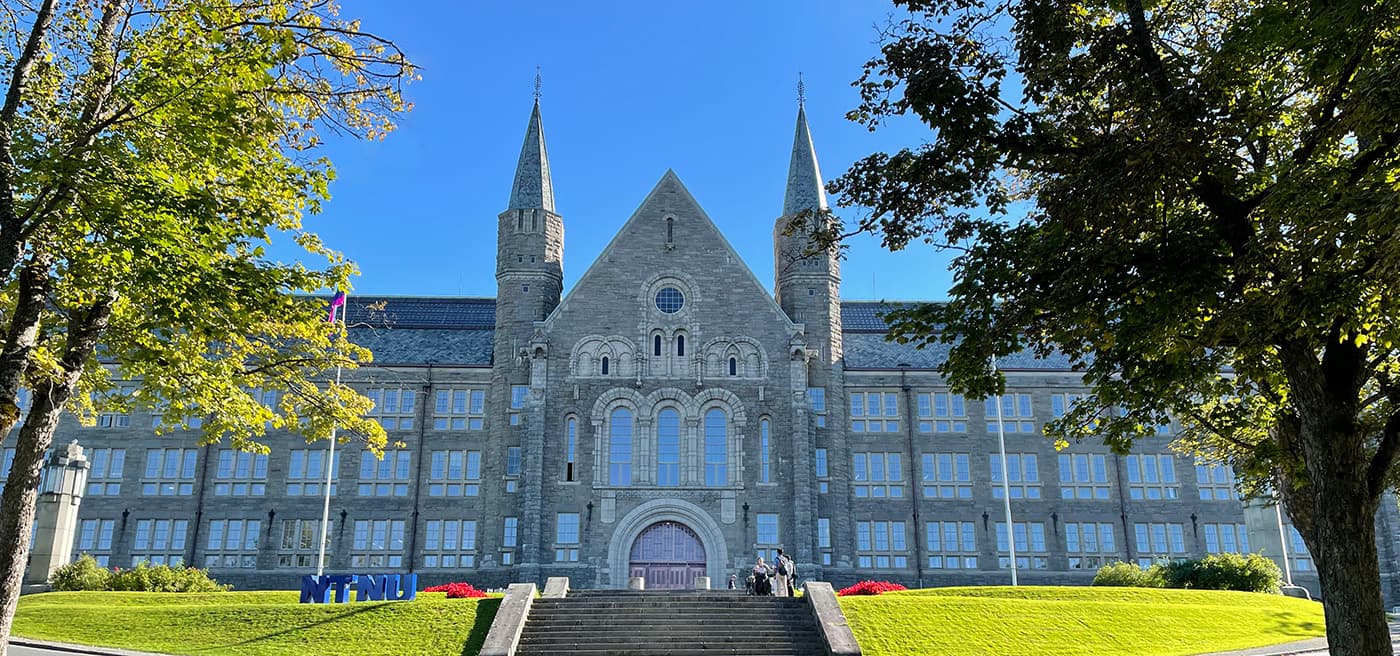
The initiative is driven by a team of leading software engineering researchers at NTNU, and will achieve its goals through four lines of activity.
06Activities
Four lines of work.
As the research challenges call for groundbreaking outcomes across multiple facets of software engineering and society, and given the team's strong track record, the project aims to submit at least three FriPro applications and two ERC proposals during its course. The project team has already submitted the first-stage SFF proposal and will proceed with the second-stage submission if selected.
The interdisciplinary nature of SE is becoming increasingly significant as generative AI influences every aspect of society. To address these challenges, the team plans to submit two MSCA Doctoral Network proposals in collaboration with outstanding academic and industrial partners across the EU. In relation to Horizon Europe calls, the aim is to submit at least three proposals under the CL3 and CL4 programmes.
Furthermore, the project will organise two proposal-writing seminars, enabling team members and proposal-writing experts to work together to draft and refine submissions.